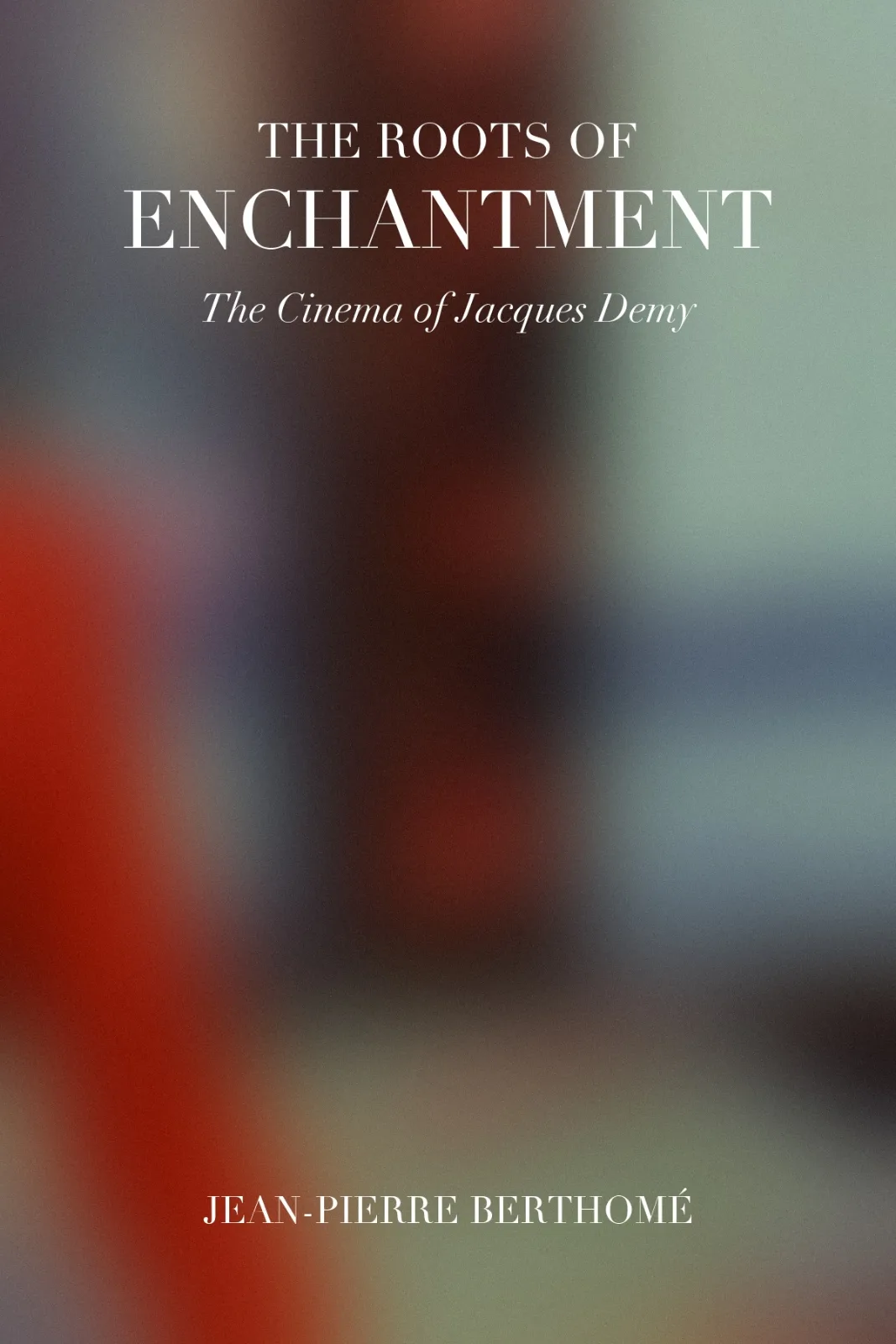
Jacques Demy (1931–1990) made some of the best-loved films in French cinema, among them Lola, The Umbrellas of Cherbourg, The Young Girls of Rochefort and Donkey Skin. He is also one of its least understood directors. Behind the pastel colours, the sung dialogue and the fairy-tale surfaces lies work of surprising gravity. The Algerian War tears apart the young lovers of Umbrellas. Bay of Angels descends into the inferno of the casino, and The Pied Piper shows a medieval world ravaged by plague and intolerance. Demy dreamed of a total cinema, in which colour, music, décor and performance count equally. He also dreamed, like Balzac, of one vast interlocking work whose characters wander from film to film: Roland Cassard leaves Lola and resurfaces in Cherbourg, and Lola herself turns up years later in Los Angeles in Model Shop.
Jean-Pierre Berthomé was fifteen when he watched Demy shoot Lola in the streets of Nantes. He spent three years interviewing the director, and he later followed four of his productions from script to sound mix. First published in 1982, his book follows Demy chronologically, film by film. It begins with Demy's childhood in his parents' garage in Nantes and ends with Three Seats for the 26th and Agnès Varda's Jacquot de Nantes. Along the way it traces the making of each film and the long collaborations with Michel Legrand, Bernard Évein and the producer Mag Bodard. It also shows the web of echoes that binds the films together. This is the first English translation of the definitive third edition (2014). It includes a foreword by the novelist Paul Guimard and a closing chapter on how time has changed the way Demy's films are seen. Also included are a 1986 public conversation between Demy and Berthomé at the Cinémathèque française, an essay on the fate of Demy's legacy, and a full filmography.
Translated Claude Stevens and Paul Cronin.
Jean-Pierre Berthomé (1944–2025) was a French film historian, critic and professor emeritus at Rennes 2 University. A longtime contributor to Positif, he was a leading authority on Jacques Demy and wrote extensively on Orson Welles, Max Ophuls and the art of film production design.
Soon