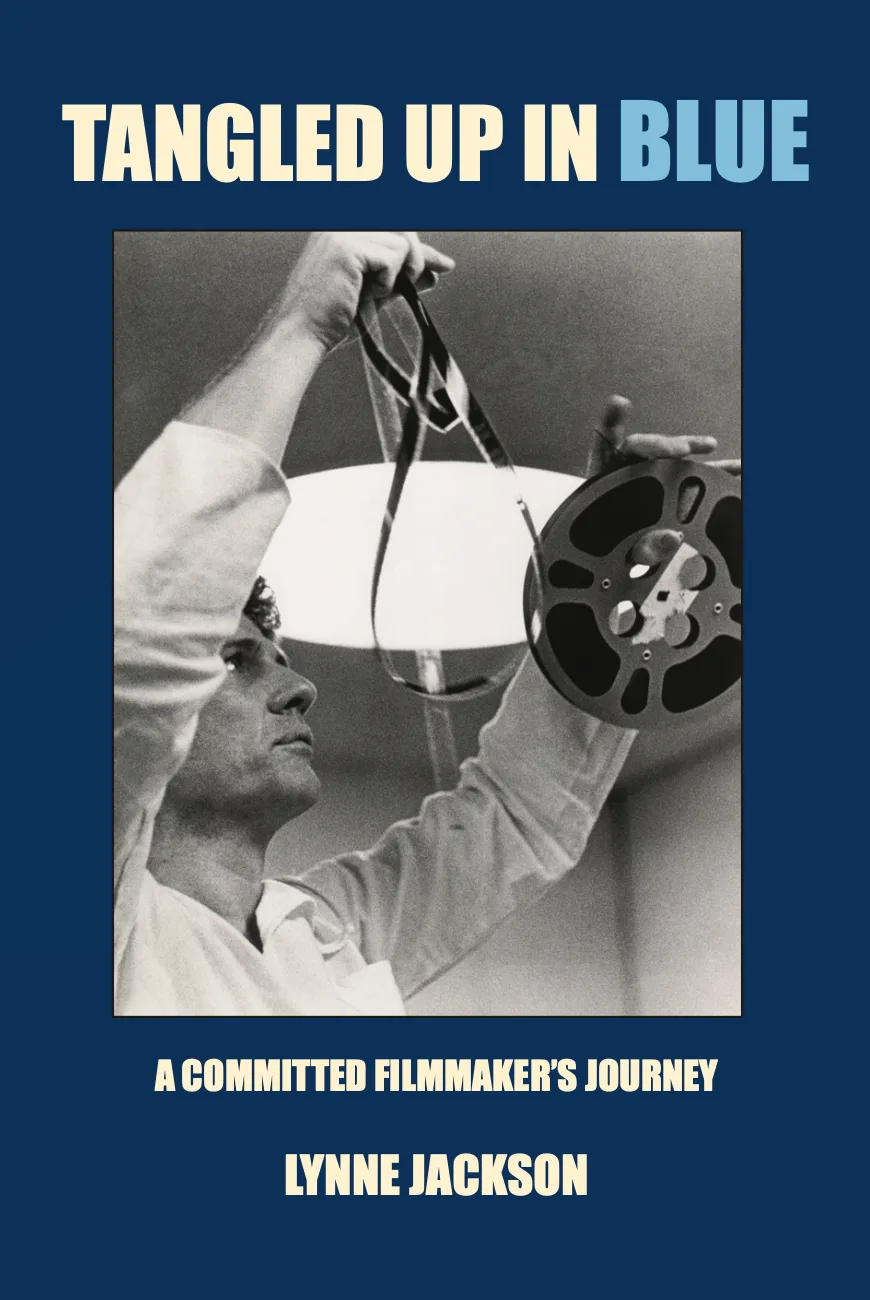
James Blue (1930–1980) was one of the most original American filmmakers of his generation, and one of the least known. A teenage actor from Oregon who trained at IDHEC, the Paris film school, he made Les Oliviers de la Justice (1962) in Algeria in the midst of the war of independence, and won the Critics’ Week prize at Cannes. For the United States Information Agency he went on to make a trilogy of films in Colombia, as well as The March (1964), his record of the March on Washington, and A Few Notes on Our Food Problem (1968), which was nominated for an Academy Award. Across five continents he wrestled with the same questions: whose story is being told, who gets to tell it, and how a filmmaker can capture the truth of other people’s lives without betraying it.
Tangled Up in Blue is the first full account of that restless career, drawing on Blue’s own journals, letters and recorded interviews. Lynne Jackson follows him from the New Wave to the mass-media propaganda of the Cold War, from the observational films he made in Kenya to his community video work in Houston and Buffalo, where he became a teacher who placed the camera in the hands of the people he filmed. The result is the portrait of an artist who turned away from fiction and fame to pursue a more democratic cinema, and a vivid history of documentary’s most searching decades.
Lynne Jackson is a Brooklyn-based writer and filmmaker. She is co-producer with George Stoney and Betty Puleston of Race or Reason: The Bellport Dilemma and Professor Emerita, St Francis College, Brooklyn.
Soon


