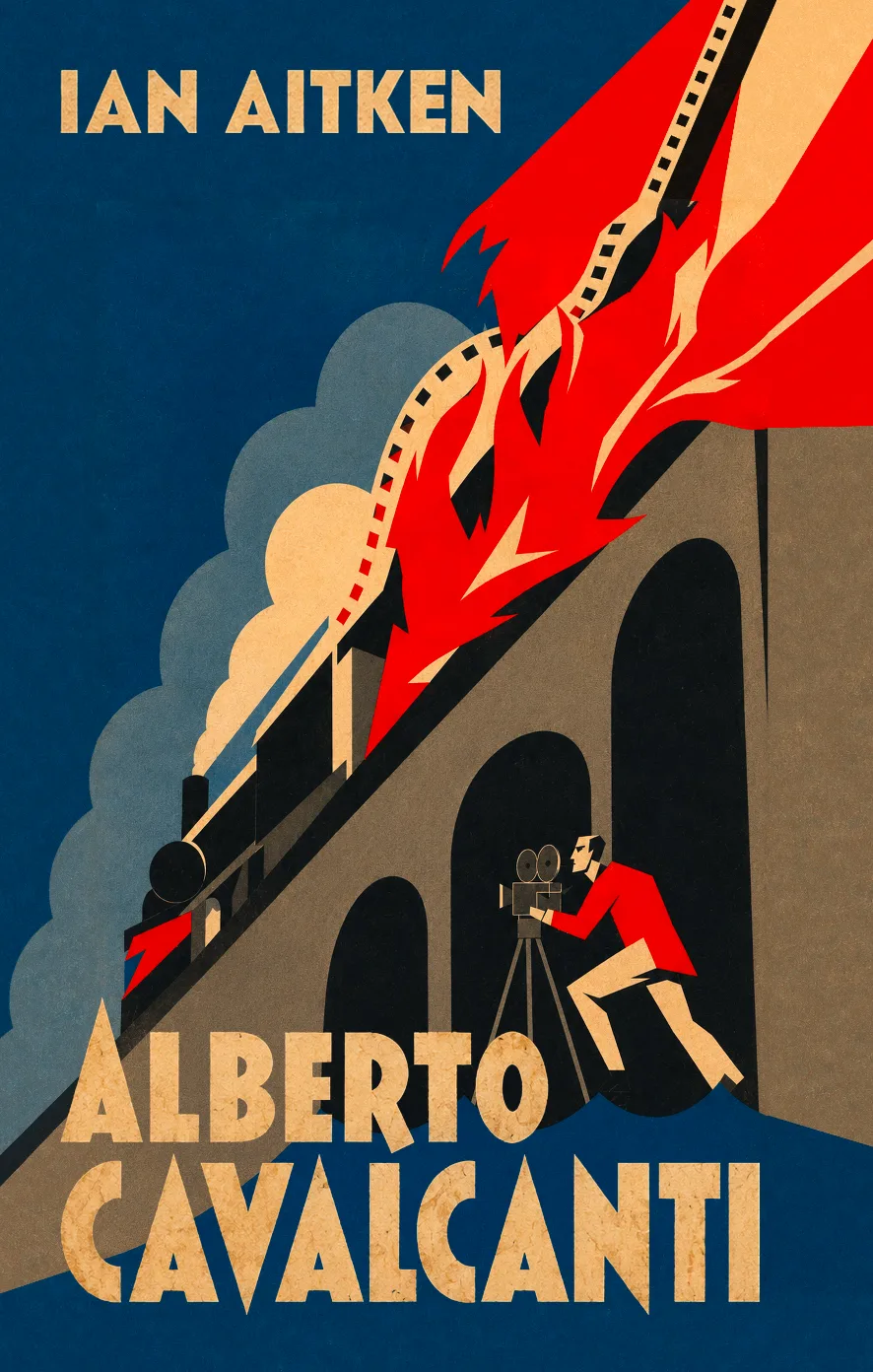
Alberto Cavalcanti was one of the most cosmopolitan, restless and influential figures in twentieth-century cinema. Born in Brazil, he began his filmmaking career amid the French avant- garde of the 1920s before becoming a crucial figure in the British documentary movement, where his work at the GPO Film Unit helped transform the creative use of sound in cinema. At Ealing Studios he went on to play a central role in shaping the studio’s wartime and immediate postwar identity, directing and producing films including Went the Day Well?, Champagne Charlie, Dead of Night and Nicholas Nickleby.
Yet Cavalcanti’s career extended far beyond British cinema. Moving between France, Britain, Brazil, East Germany and elsewhere, he repeatedly crossed the boundaries between documentary and fiction, realism and surrealism, avant-garde experiment and commercial filmmaking. His attempts to establish a national cinema in Brazil, his work with Bertolt Brecht and the East German film industry, and his later career in Europe and Israel form part of an extraordinary filmmaking life spanning more than half a century.
First published in 2000, Ian Aitken’s pioneering critical study has been extensively revised, reconsidered and greatly expanded for this new edition. Drawing on decades of further research, Aitken reassesses Cavalcanti’s achievements and his singular position across several national cinemas. The volume also contains a wealth of newly assembled primary material, including substantial excerpts from Cavalcanti’s unpublished autobiography— published here for the first time—together with selections of his writings on cinema and important contemporary writings on Cavalcanti and his work.
Part critical biography, part history of international film culture, this new edition restores to view a filmmaker whose career was as unpredictable and wide-ranging as the cinema itself.
Soon